ZK/SEC Research notes from zkSecurity
All posts
educative · zk · elliptic-curves

Notes and Proofs for Divisor Techniques

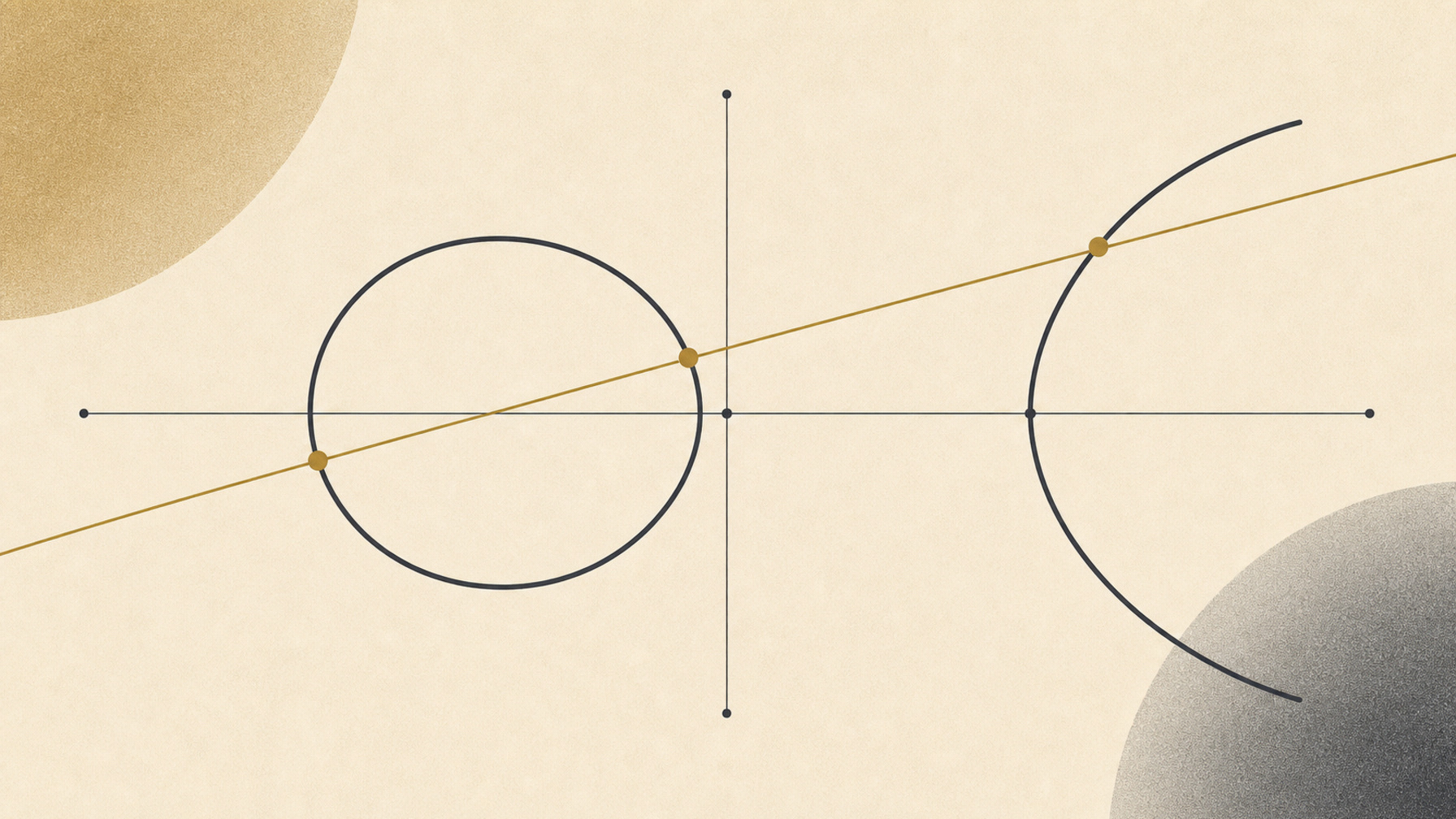
Elliptic Artwork

On the request of MAGIC Grants we were asked to review the security of the divisor-based protocol for proving Elliptic Curve Inner Products (ECIPs) introduced by Liam Eagen in his 2022 eprint. The motivation is the upcoming upgrade to Monero, which will employ this technique; then billions are on the line, you want to be sure. Our contributions include a new proof of extraction, more exact definitions of the relations proven, and a formal treatment of the composition of the protocol with a non-interactive proof. Our treatment goes all the way from the algebraic geometry to the concrete constraints that must be checked.

Download The Notes (PDF)

Application

The intended application is the upcoming Full-Chain Membership Proofs (FCMP++) for Monero, which composes the ECIP with Curve Trees to get set-membership proofs much more efficient than a standard Merkle tree verified inside a proof system. This will allow Monero to scale its membership proofs to include every possible transaction. Curve trees requires:

  • A single lookup.
  • A single scalar multiplication.

Proven using a circuit over a field that is the base field of the elliptic curve. The usual way to prove the scalar multiplication involves emulating the group operation in-circuit, e.g. proving the execution of the standard double-and-add inside the circuit. Eagen's technique instead exploits non-determinism and interaction: instead of computing the group operations, the prover constructs a proof (witness), commits to it, and then the verifier samples a random challenge to verify the validity of the proof. A small teaser follows.

The Trick

We think the original paper is underappreciated; the core observation is very neat. The key insight is that there is a 1-to-1 correspondence (up to nonzero scalar) between rational functions on an elliptic curve $E$ and principal divisors: formal sums of points with integer multiplicities, of degree zero, that sum to the identity on $E$. Concretely, $P_1, \ldots, P_n \in E$ satisfy $\sum_i P_i = \mathcal{O}$ (counted with multiplicity) if there exists a rational function $f \in \mathbb{F}(E)$ with divisor:

$$ \mathrm{div}(f) = \sum_i (P_i) - n(\mathcal{O}) $$

The useful direction: a witness for the sum is a rational function with the prescribed zeros at the $P_i$ and a matching pole of order $n$ at infinity. Hence, rather than emulating the group law inside the circuit, the prover commits to the coefficients of $f$ and the verifier checks that $f$ has exactly that divisor. Taking the logarithmic derivative reduces this further: the check becomes an inner product between the prover's secret coefficients and a public vector derived from a random challenge point, instead of evaluating $f$ at every $P_i$.

Done naively, this saves nothing over the simple group law emulation approach, however, by applying Haböck's logarithmic derivative trick to the expression, everything becomes a linear combination between public challenge values and the divisor polynomial $f(X, Y) \in \mathbb{F}[E]$. The end result is that an MSM of arbitrary length can be verified in 7 multiplicative constraints. All this is covered in much more detail in our writeup.

We Can Help

With broad practical/academic expertise zkSecurity helps its clients review/develop/employ the most advanced cryptography with confidence. Including providing additional formalism beyond the original paper, helping you go from paper to practice without fear of security/proof gaps. Whether you need extra eyes on your own work, or work you plan to incorporate into your solution, we are happy to discuss how we may help.

Keep reading
Recommended

ZNARKs: SNARKs for The Integers

Hey there! Interested in learning about SNARKs that work beyond finite fields? We’ve been diving into $\mathbb{Z}$NARKs, which are SNARKs tailored for computations involving integers. Our latest post unpacks this intriguing area, showing how we can construct efficient proof systems for integer-based computations. You'll discover nifty tricks like range checks without bit decomposition and mixed field emulation, plus how these techniques can simplify RSA computations. Intrigued by the idea of using randomness for more reliable proofs or exploring an intellectual curiosity like $\mathbb{Q}$-circuits? This post covers it all, including a peek into the future of polynomial commitments. Dive in and explore with us!

Mathias Hall-Andersen · November 11, 2024

WE-KZG: Encrypt to KZG.

Ever wondered if you could create a ciphertext that's only decrypted when a polynomial inside a commitment has a particular value? We’ve explored this notion using KZG commitments in our latest Asiacrypt 2024 paper. Dive into the elegant world of Witness Encryption and see how it can be applied in cool ways like Laconic Oblivious Transfer. This approach keeps things as efficient as regular KZG operations and might just spark some creative applications of your own! Curious to learn more? Let’s explore together!

Mathias Hall-Andersen · October 08, 2024

Groth16, Intuitively

Groth16 is still the gold standard for succinct SNARKs: 128-byte proofs, constant-size verification, and a decade of real-world deployment. But despite its ubiquity, almost nobody explains *why* it works the way it does. In this post, we build Groth16 from the ground up, starting from R1CS and QAPs, then layer in pairings, trusted setup parameters, and the separator tricks (α, β, γ, δ) that make the scheme sound. By the end, you should have an intuitive grasp of every term in the final verifier equation.

David Wong · May 01, 2026
More to explore

ZPrize Came To An End! Who And How Did They Win $500,000?

In an exciting collaboration with ZPrize, we embarked on a journey to discover the fastest proofs for ECDSA signatures, ultimately crowning two standout approaches as winners. The blog post delves into the innovative solutions that captured the $500,000 prize by pushing the boundaries of zero-knowledge proofs. The story offers a fascinating glimpse into how these cutting-edge techniques might pave the way for privacy-focused applications. Curious to know which teams came out on top and how they did it? Dive in to explore the thrilling results and what's next in the ZK space!

ZK/SEC · May 06, 2024

Uncovering the Phantom Challenge Soundness Bug in Solana's ZK ElGamal Proof Program

In June 2025, we uncovered a serious soundness issue in Solana's ZK ElGamal Proof Program that could let attackers manipulate confidential token transfers undetected. We worked with the Anza team to quickly address the flaw by pausing and disabling vulnerable components. This post dives into the root cause, which was a subtle mistake in handling prover-generated challenges within sigma OR proofs, revealing broader lessons in zero-knowledge protocol security. If you're interested in cryptographic protocol design, this could provide valuable insights.

Suneal Gong · June 26, 2025

Archetype x zkSecurity - Proof is in the Pudding: The Other Dark Forest (Offchain Public Keys)

In Session 07 of "Proof is in the Pudding," we explore the other dark forest, the realm of offchain public keys. We dive into zkLogin, ZK Email, and ZKPassport, examining how these protocols handle authentication and privacy. We also discuss the issue of unlinkability in privacy protocols and why replacing traditional signature verifications with zero-knowledge proofs could unlock more interesting and powerful ZK products.

ZK/SEC · October 21, 2025